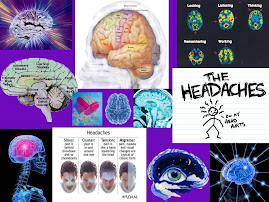
I still have not gotten my laptop back because it is broken (I'm currently using someone else's), and it has really set me back from getting work done. For the first three days without a computer, I wrote out things I need to get done soon for the research part and action plan. I'm really trying to make sure I have my action project planned since I am aiming to have it on October 12th (parent teacher conferences) in the cafeteria. I made a list of health organizations and possible places that can donate refreshements and have begun to contact these places/organizations.
I really do need to work on finishing notes and starting my paper, but right now I'm more worried about making sure this health fair is planned out. I need to still see what students can help out.
I hope this works out.
Thursday, September 3, 2009

Wednesday, March 18, 2009
New Action Project Ideas
My action project is going to be a health fair. Students in our grade who have a graduation project topic related to health can participate by setting up a table with information on their topic. This can include: a poster board, a PowerPoint, a website, or other media. They can also bring in a specialist on their topic and/or someone from an organization related to their topic.
Ms. Savido and I have decided the health fair can take place during Parent Teacher Conferences, which is on October 12, 2009. The location would be the school cafeteria.
I have set up a list of students who are taking grad project class now or who took it last trimester that have a medical related topic. I hope to have a meeting with these students soon to discuss more possible ideas.
Monday, March 16, 2009
Accomplishments and Challenges
Today, I talked with Ms. Savido about the list I constructed for possible people that can participate in my Health Fair. I also came up with more ideas for the Health Fair.
I started the Pre-Questions for the proposal on Friday, and I'm about half way done. The challenges I currently have is that I need better ideas for my Health Fair and I need to complete my notes.
I started the Pre-Questions for the proposal on Friday, and I'm about half way done. The challenges I currently have is that I need better ideas for my Health Fair and I need to complete my notes.
Wednesday, February 18, 2009
February 18th
Today, I completed writing my interview questions and my survey questions. I found a doctor at University of Pittsburgh that is an assistant professor of Neurology at Pitt and is also the chief of the Headache Division. I e-mailed him to request an intervew.
Also, I e-mailed Children's Hospital to ask about volunteering there. I would like to work in the Neurology Department, but since that is not very likely, I will be glad to volunteer in the hospital wherever needed.
I currently do not have a lot of ideas for my Action Project, but I am trying to think of what to do. I want to inform students, and possibly adults, about the best ways to treat and prevent their headaches, but am unsure how to do so.
Thursday, January 29, 2009
Did You Know...?
- Over 90% of children will have a headache at least once in their childhood (The Detroit News)
- Migraines affect around 30 million people in the U.S. (Migraine Headaches)
- Approximately 75% of people who suffer migraines in the U.S. are women (Migraine Headaches)
- Only 10% of headaches are caused by serious illnesses and infection (Headaches)
- Approximately 5% of young children and 10% of teens get migraine headaches (Headaches)
- Migraines affect approximately 6% of men and 18% of women (Allergies and Migraine Headaches)
- Migraines cost society over $30 million dollars each year (Migraine Headaches – The Most Commonly Used Nutritional Supplements for Migraine Prevention)
- Depression is three-times as frequent in those who suffer with migraines (Migraine Headaches – The Most Commonly Used Nutritional Supplements for Migraine Prevention)
- Americans consume about 200-300 mg of caffeine daily, or approximately 2-3 cups of coffee (Caffeine and Headaches: What you Need to Know
- Less than 2% of people suffer from rebound headaches from overuse of pain relievers (Caffeine and Headaches: What you Need to Know)
- Over 85% of women and 82% of men that suffer from severe migraines have had headache-related disability (Migraine Headaches, Vision Effects)
Friday, January 23, 2009
Essential and Foundation Questions
Essential Question:
How do headaches and headache medications affect people's day-to-day lives differently?
Foundation Questions:
1. What is neuroscience and what do neuroscientists do?
2. How many people in the United States are affected by headaches?
3. How do headaches in children, teenagers, and adults differ?
4. What is thought to be the best way to prevent or treat migraines?
5. What are the most common triggers of headaches and migraines?
6. What are the most common symptoms of headaches and migraines?
7. What are common side effects of treatments of headaches and migraines?
8. How can you prevent and treat headaches and migraines?
9. What types of diseases/health issues can cause headaches?
10. How much does stress impact headaches and migraines?
Wednesday, January 14, 2009
January 14
Today I found 16 different websites to use for my project on neuroscience and headaches. I also started thinking about my "essential question" and have narrowed it down to a few questions that I can choose to use.
Subscribe to:
Posts (Atom)